Insulation nail
How to Select insulation fasteners: A Comprehensive Guide to duct insulation pins & foam board insulation pins
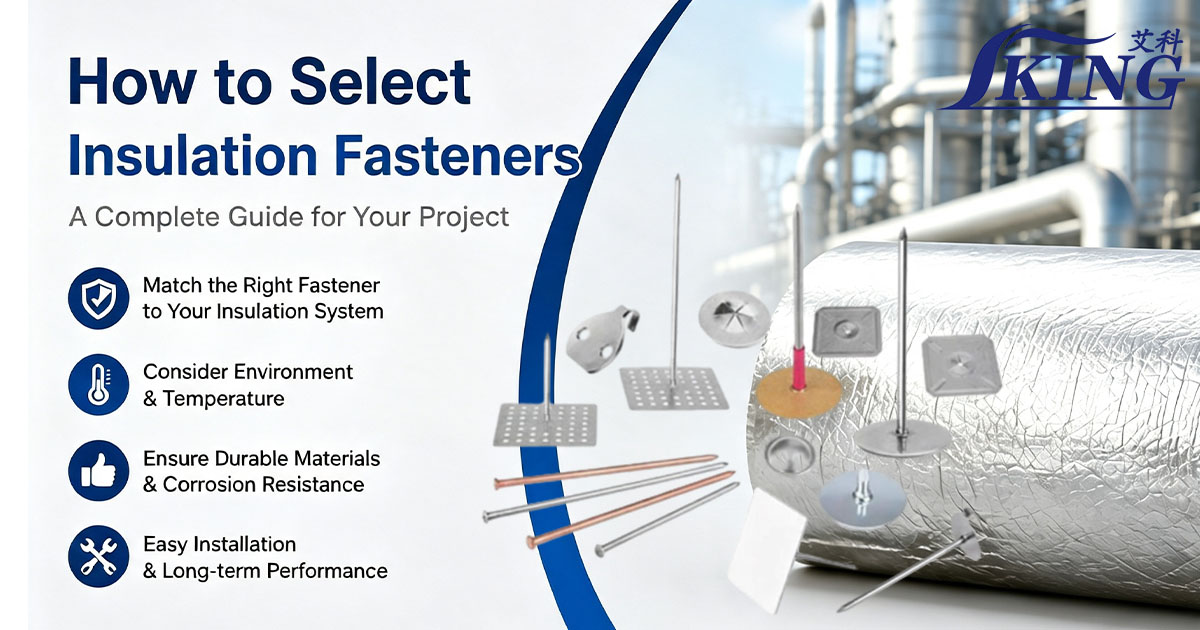
Can Different Parts of Insulation Pins Have Different Materials and Coatings?
An Executive Engineering Guide
Introduction: Tackling Performance & Cost Trade-offs in Modern Fastening Systems
1. Deconstructing the Insulation Pin: Material Engineering by Component
A high-performance thermal insulation pin consists of distinct structural components, each performing a unique mechanical function during and after installation.
[ BASE PLATE / HEAD ]
     ↓
Hot-Dip Galvanized, Stainless Steel, or Aluminum
|| (Engineered for Environmental Corrosion Resistance)
     ↓
[ PIN SHAFT / STEM ]
Copper-Coated Carbon Steel or Stainless Steel
|| (Engineered for Conductivity, Weldability & Tensile Strength)
Pin Shaft (Stem): Fast Welding & Structural Strength
The pin shank is welded directly onto metal surfaces such as ductwork, industrial tanks and steel bulkheads.
304 / 316 Stainless Steel
Recommended for high-temperature areas and chemically harsh settings where reliable corrosion resistance is a necessity.Base Plate (Head): Robust Environmental Protection
The base plate holds insulation blankets and panels securely, while constantly being exposed to surrounding atmospheric conditions.
-
Hot-Dip Galvanized Steel
Its dense zinc barrier layer makes it the top pick for outdoor installations and projects operating in high-humidity environments.
- Aluminum Alloy
A lightweight, corrosion-free alternative frequently selected for marine projects and weight-sensitive construction designs.
2. Coating Technologies for Industrial Insulation Fasteners
Choosing appropriate surface finishing plays a key role in maintaining long-term structural performance.
Technical Insight:
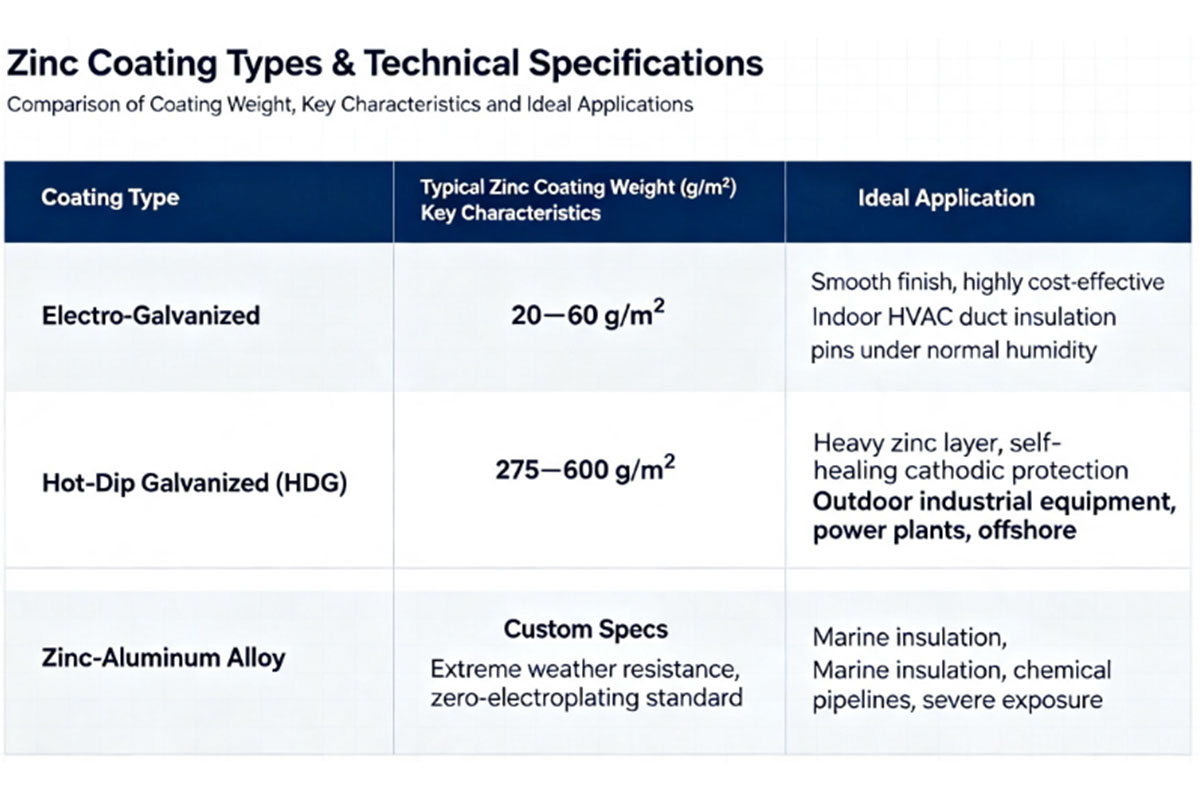
A galvanized fastener’s service life closely depends on its zinc coating mass, measured in g/m². Specifying a minimum zinc weight of 275+ g/m² allows insulation fasteners to pass stringent salt spray testing and withstand decades of outdoor service.
3. Tailored Solutions for Specialized Applications
Insulation pins adopt different mechanical structures to adapt to varied substrates and insulation materials.
Spray Foam Galvanized Metal Systems: When insulating galvanized metal spray foam structures, anti-corrosion hybrid pins inhibit rust creep and maintain stable permanent fixation.
4. Custom Manufacturing Capabilities for Engineering OEMs
Bulk contractors and global distributors often require strict technical compliance, custom tolerances, and specialized geometry (e.g., $50,000+$ units/month).
We offer complete OEM customization across:
- Custom Base Shapes
-
We offer customized head geometries, including 25 mm and 25.7 mm diameter options, sloped base designs, and anti-rotation rib structures.
- Hybrid Coatings:
- We combine different surface finishes for targeted performance: hot-dip galvanized heads paired with copper-plated pin stems for optimal welding and corrosion resistance.
- Tailored Pin Lengths & Gauges:
- Pin length and wire gauge can be fully customized to suit different insulation materials, whether for thin, lightweight fiberglass wraps or thick, heavy mineral wool batts.
Conclusion: Partner with a Leading Insulation Pin Manufacturer
Combining different materials and surface treatments for the head, stem, and washers of your insulation pins is the most cost-effective way to secure industrial thermal insulation. By specifying exact zinc coating weight metrics and custom material combinations, you protect both your engineering design and project budget.
Looking for technical data or samples to support your upcoming project?
Specialising in insulation pin production, IKING delivers custom engineered insulation fasteners, duct insulation pins and robust structural anchoring solutions for global markets. Get in touch with our technical sales team to request product datasheets, salt spray test documentation or complimentary OEM samples.