PRODUCT
IKING Capacitor Discharge Weld Pins
Product Attributes :
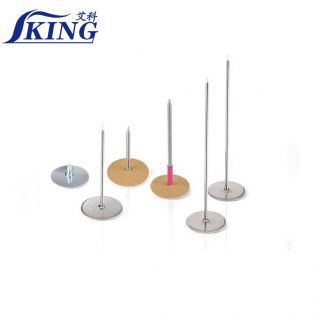
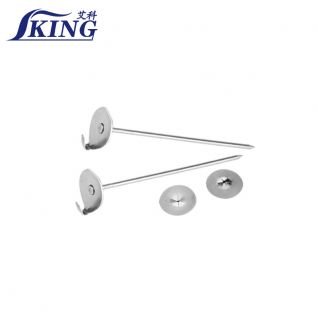
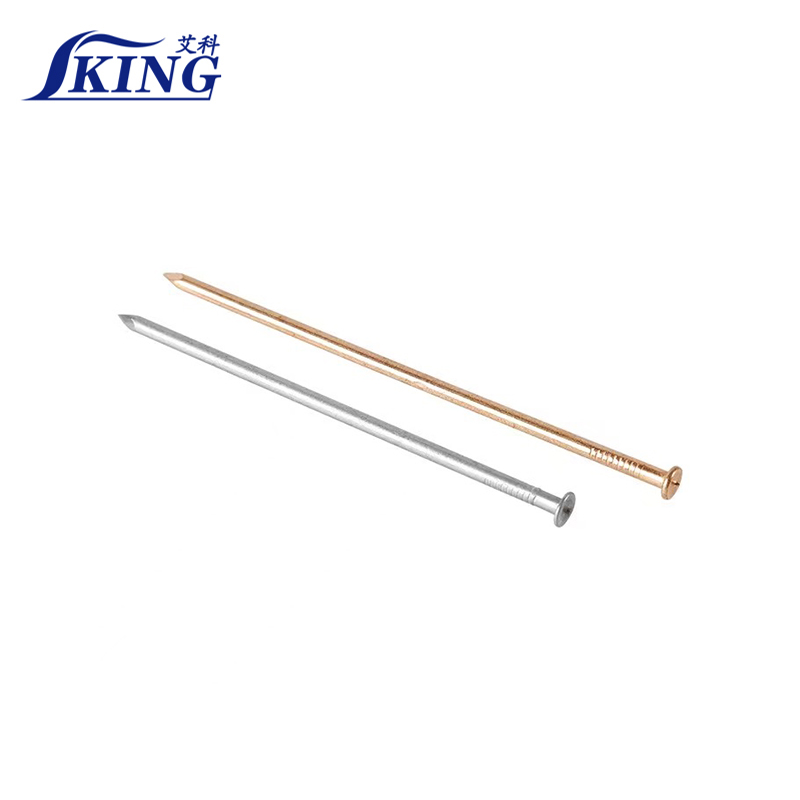
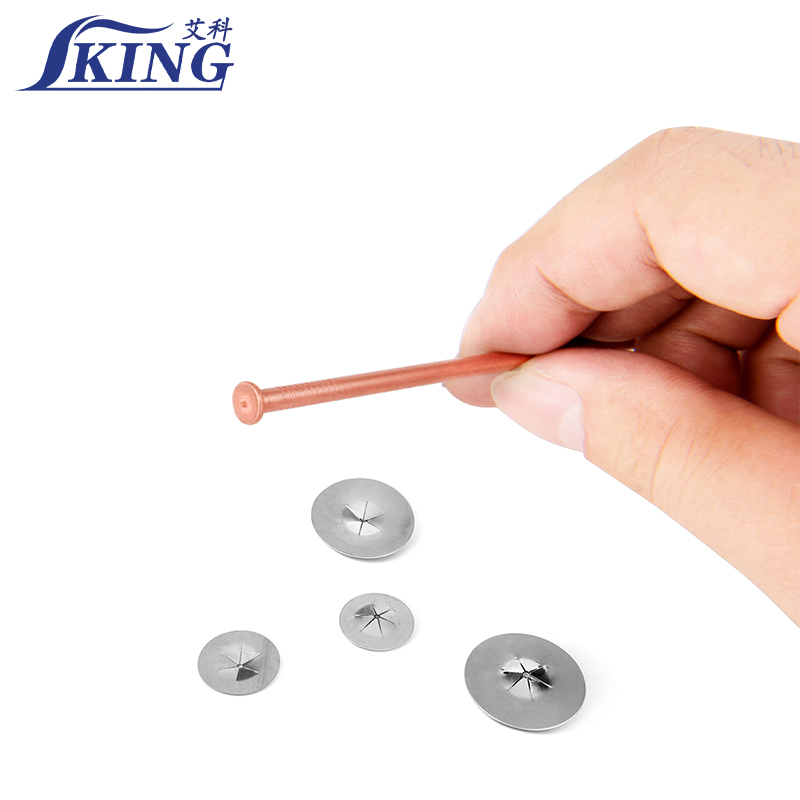
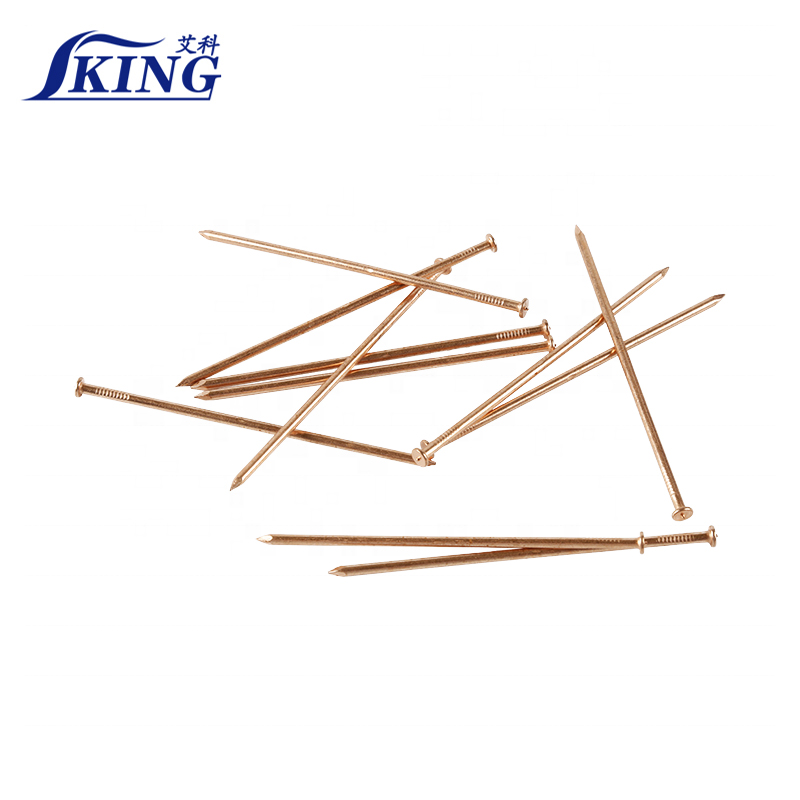
IKING CD weld pins are premium capacitor discharge weld pins designed for insulation fixing. As high-performance insulation fasteners, these CD stud welding pins deliver fast, clean welding with no sheet damage. Durable and corrosion-resistant, they suit all harsh thermal insulation scenarios and support custom sizes.
Product Description
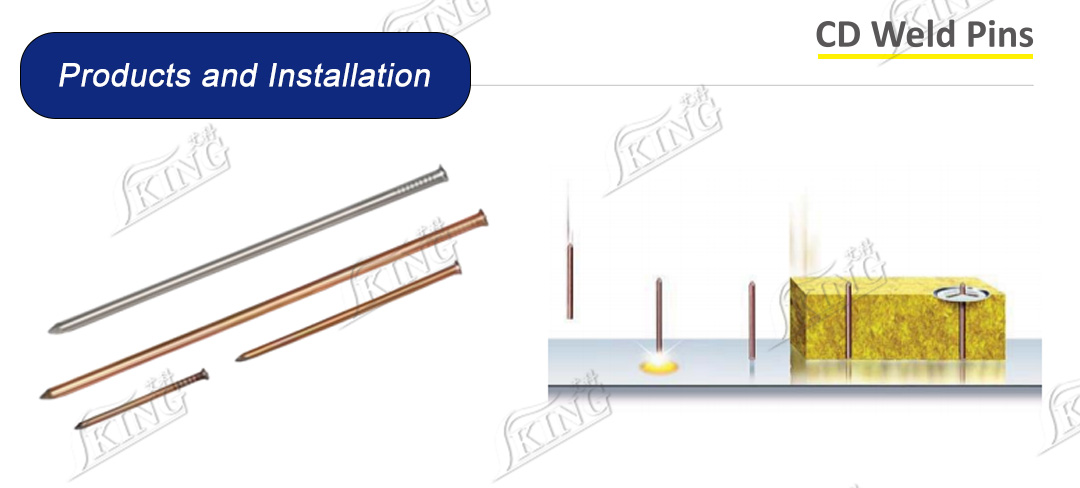
IKING professional capacitor discharge weld pins are precision fastening components designed for industrial and commercial thermal insulation projects. Adopting advanced instantaneous discharge welding technology, these pins complete high-strength bonding in one second, with ultra-low thermal radiation that avoids thin metal plate deformation and surface burn marks. Made of premium mild steel and stainless steel with galvanized anti-corrosion treatment, they deliver stable compression resistance, vibration resistance, and long-term durability, perfectly adapting to various harsh construction environments.
Specification
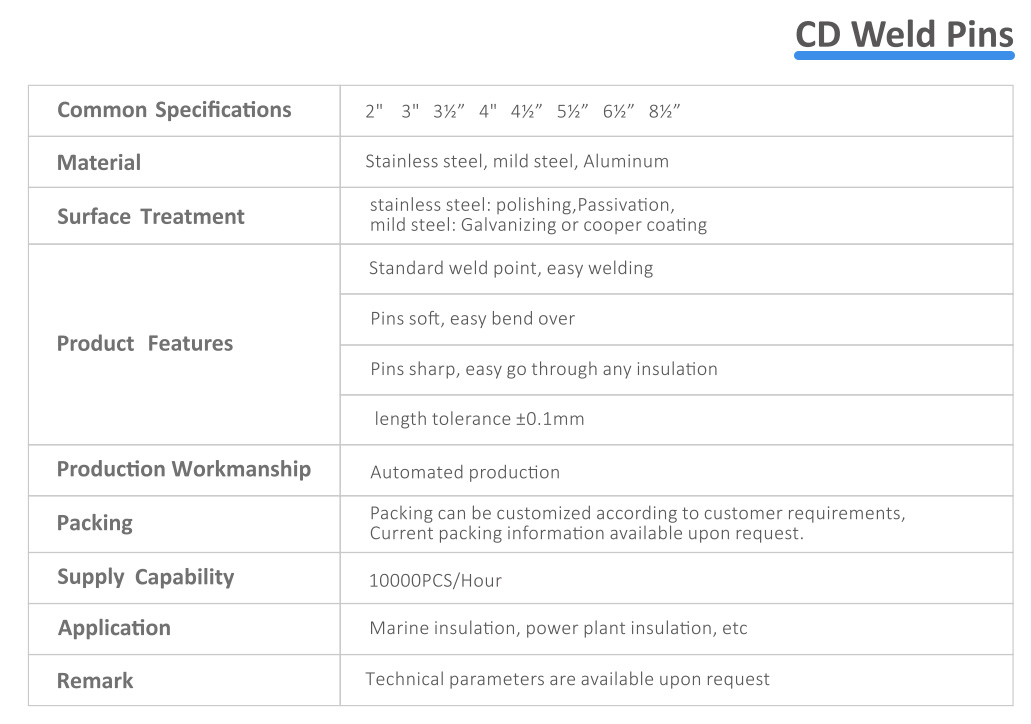
Key Features
- Professional Welding Performance: Standard cd weld pins support precise capacitor discharge welding, leaving no thermal damage or residual marks on the back of metal sheets, ensuring neat and intact equipment surfaces after construction.
- Superior Durability: High-quality steel with a galvanized finish ensures excellent corrosion, oxidation, and vibration resistance, extending the service life of insulation fixing structures.
- Wide Universal Adaptability: Specially designed Weld Pins for Insulation adopt international standard sizes, fully compatible with all mainstream CD welding equipment and various metal substrates, covering most insulation materials on the market.
- High Construction Efficiency: One-piece forming installation simplifies operating steps, effectively shortening construction cycles and reducing overall labor and time costs for insulation projects.
- Flexible Customization: Multiple standard specifications and personalized customized options to match different insulation thicknesses and on-site project requirements.
Application Scope
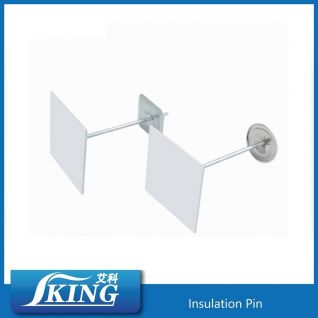
Our high-performance insulation weld pins are widely applicable for HVAC air duct insulation, marine equipment insulation, industrial boiler and thermal equipment insulation, building metal sheet insulation, and refrigeration ventilation system insulation. They serve all industrial and commercial thermal insulation fixing scenarios, providing reliable and efficient fastening solutions for global engineering projects.
FAQ
1. What core advantages do capacitor discharge weld pins have over ordinary fasteners?
Different from traditional welding fasteners, capacitor discharge weld pins adopt low-temperature instantaneous welding technology. They cause no sheet deformation, burn marks, or penetration damage, with higher welding firmness and better anti-corrosion and anti-vibration performance, fully meeting high-standard industrial engineering requirements.
2. What scenarios are CD weld pins suitable for?
cd weld pins are versatile, dedicated fasteners, mainly used for fixing glass wool, rock wool, aluminum foil insulation, and other thermal materials. They are widely used in HVAC duct systems, industrial equipment, ship marine engineering, and building thermal insulation construction.
3. Are Weld Pins for Insulation easy for on-site installation?
Weld Pins for Insulation feature a lightweight and standardized design, compatible with all mainstream portable CD welding guns. No complex auxiliary tools are required, with simple and efficient operation, which greatly improves on-site construction efficiency and reduces technical operation thresholds.
4. What guarantees the service life of insulation weld pins?
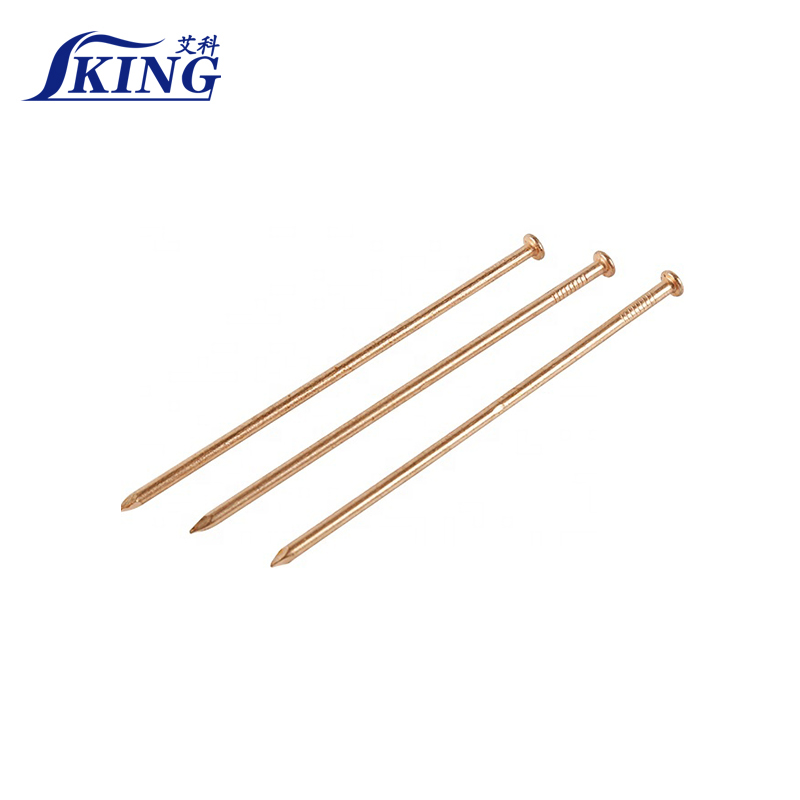
Insulation weld pins are forged from high-quality mild steel or stainless steel, with optional galvanized and copper-plated anti-corrosion surface treatments. The optimized material and process enable them to stably resist high temperature, humidity, and marine salt spray erosion, maintaining long-term stable fastening performance.
5. Can you provide customized pin specifications?
Yes, we support customized pin lengths, diameters, and surface treatments to accurately match different insulation thicknesses and personalized project demands.
6. Will the welding process damage metal equipment surfaces?
No. The concentrated short-time discharge welding generates minimal instantaneous heat, which will not cause thermal deformation, damage or residual traces on metal sheet surfaces, protecting the integrity of equipment and ducts.
For more product information, please click here.
Online Inquiry